















































How Perimenopause & Menopause Affect Sleep — And What You Can Do to Improve Rest
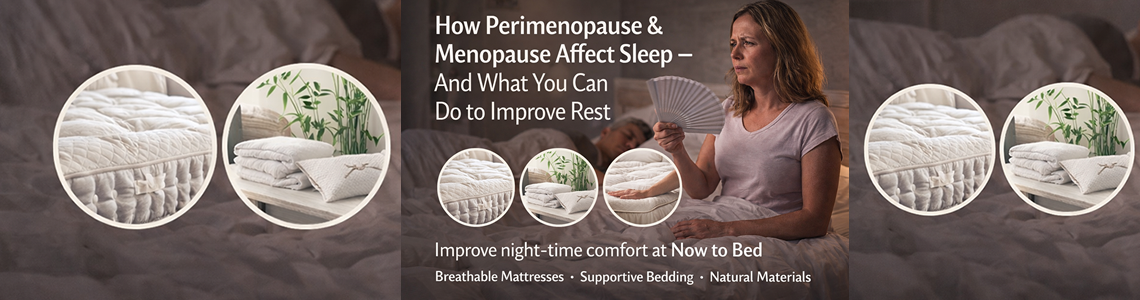
For many women, changes in sleep can begin much earlier than expected. While most people associate menopause with the late 40s or 50s, symptoms of perimenopause can begin earlier — sometimes in early thirties. This isn’t the experience for everyone, but hormonal changes can start gradually and affect sleep long before menopause officially begins.
During this time, many women notice differences in how they sleep — from night sweats and overheating to restless nights, difficulty switching off, or waking frequently through the night.
These changes are common — but that doesn’t mean you have to simply “put up with them”.
At Now to Bed, we believe that understanding what’s happening in your body — and creating a sleep environment that supports you — can make a real difference to comfort, rest and daily wellbeing.
Why Perimenopause & Menopause Affect Sleep
Perimenopause and menopause involve fluctuations — and eventual decline — in key hormones including:
oestrogen
progesterone
melatonin
cortisol (stress response)
These hormones play a major role in:
body temperature regulation
emotional balance
relaxation
deep sleep cycles
As they shift, sleep can naturally become lighter, more restless and easier to disturb.
Many women experience:
night sweats or sudden overheating
difficulty falling asleep
waking during the night
sensitivity to room temperature
restless or shallow sleep
anxiety or racing thoughts at night
early-morning waking
feeling unrefreshed on waking
For some, this happens gradually.
For others, the change feels sudden and disruptive.
However — understanding why it happens makes it easier to take supportive steps.
Night Sweats, Hot Flushes & Temperature Spikes
One of the most challenging symptoms affecting sleep is overheating.
During perimenopause and menopause, temperature signals in the body become less stable. This can trigger:
sudden heat surges
sweating during sleep
damp bedding
chills after cooling down
difficulty falling back asleep
These interruptions can prevent the body from reaching deep, restorative sleep stages.
That’s why menopausal tiredness can feel different — even if you’ve technically “slept for hours”.
The key is temperature regulation, breathability and moisture control — especially in your sleep environment.
How Your Sleep Environment Can Support You
While menopause symptoms are biological, your sleep setup can help ease discomfort and promote calmer, more stable rest.
From a Now to Bed perspective, here are practical ways to support sleep quality.
✔ Choose Breathable, Naturally Cooling Mattress Materials
Dense foams can trap heat — which may feel uncomfortable during hormonal temperature fluctuations.
More breathable options include:
natural latex
wool and cotton comfort layers
bamboo-blend fibres
pocket-sprung support systems
mattresses with natural fillings
These materials:
promote airflow
help disperse heat
reduce clamminess
support a more stable sleeping temperature
This can make night sweats less disruptive — and help the body return to comfort more quickly.
✔ Consider a Supportive & Breathable Mattress Topper
A topper can:
soften a mattress that feels too firm
relieve pressure in hips & shoulders
add a breathable comfort layer
Natural fibre toppers can also help:
wick away moisture
reduce overheating
improve surface comfort without replacing the mattress
A small change can sometimes make a noticeable difference in night comfort.
✔ Choose Lightweight, Breathable Bedding & Sleep Accessories
Materials matter — especially during perimenopause.
Helpful bedding choices include:
cotton and bamboo sheets
breathable pillow covers
moisture-wicking duvets
natural fibre fillings
These allow heat to escape rather than trapping it.
The goal is a cool, dry and comfortable sleeping surface — not heavy warmth.
✔ Support Body Comfort & Joint Sensitivity
Hormonal changes can also affect:
joint comfort
muscle tension
back and hip support needs
A mattress that supports spinal alignment can help reduce:
morning stiffness
pressure discomfort
aches caused by tossing and turning
When the body feels supported, it relaxes more easily — helping sleep become deeper and more restorative.
This becomes especially important during perimenopause and menopause, when sleep may already feel fragmented.
The Emotional & Mental Side of Menopause Sleep
Sleep disruption is not only physical.
Hormonal shifts can affect:
mood regulation
emotional processing
stress response
mental clarity
This can lead to:
overthinking at night
worry or tension before bed
heightened sensitivity to noise or discomfort
difficulty winding down
A calming evening wind-down can help:
soft lighting
cooler room temperature
consistent bedtime rhythm
low-stimulation activities
The aim isn’t perfection — it’s giving your body and mind space to switch off.
Our Perspective at Now to Bed
We understand that menopause and perimenopause affect every woman differently.
Sleep is deeply personal — and so is comfort.
That’s why we focus on:
breathable, natural mattress options
comfort-first sleep accessories
supportive, cooling bedding choices
expert guidance based on how you sleep
We don’t believe sleep during menopause should feel like a battle.
The right sleep environment can’t remove symptoms completely —
but it can make nights calmer, cooler and more comfortable.
And that makes a meaningful difference to everyday life.
Final Thoughts
Perimenopause and menopause are major life transitions — and they deserve compassion, understanding and support.
If you’re finding that sleep has changed — or no longer feels restorative — small adjustments to your mattress, bedding and environment may help improve comfort and rest.
At Now to Bed, our team is always happy to offer friendly, personalised advice to help you create a sleep setup that supports your wellbeing.
Because great sleep matters — especially when your body needs it most.
Related Products



 10% OFF Appiled
Leave a Comment